The Challenge of Charging Electric Vehicles Without Off-Street Parking in the UK
Introduction
As the UK moves towards a more sustainable future, electric vehicles (EVs) are becoming a popular choice for many households. With lower emissions and government incentives, EVs are helping to shape a greener world. But for millions of households, the transition to electric comes with a significant challenge: access to off-street parking for charging. Let’s explore how the lack of private parking impacts the ability to charge EVs—particularly with cheap off-peak electricity—and what this means for the future of sustainable transport.
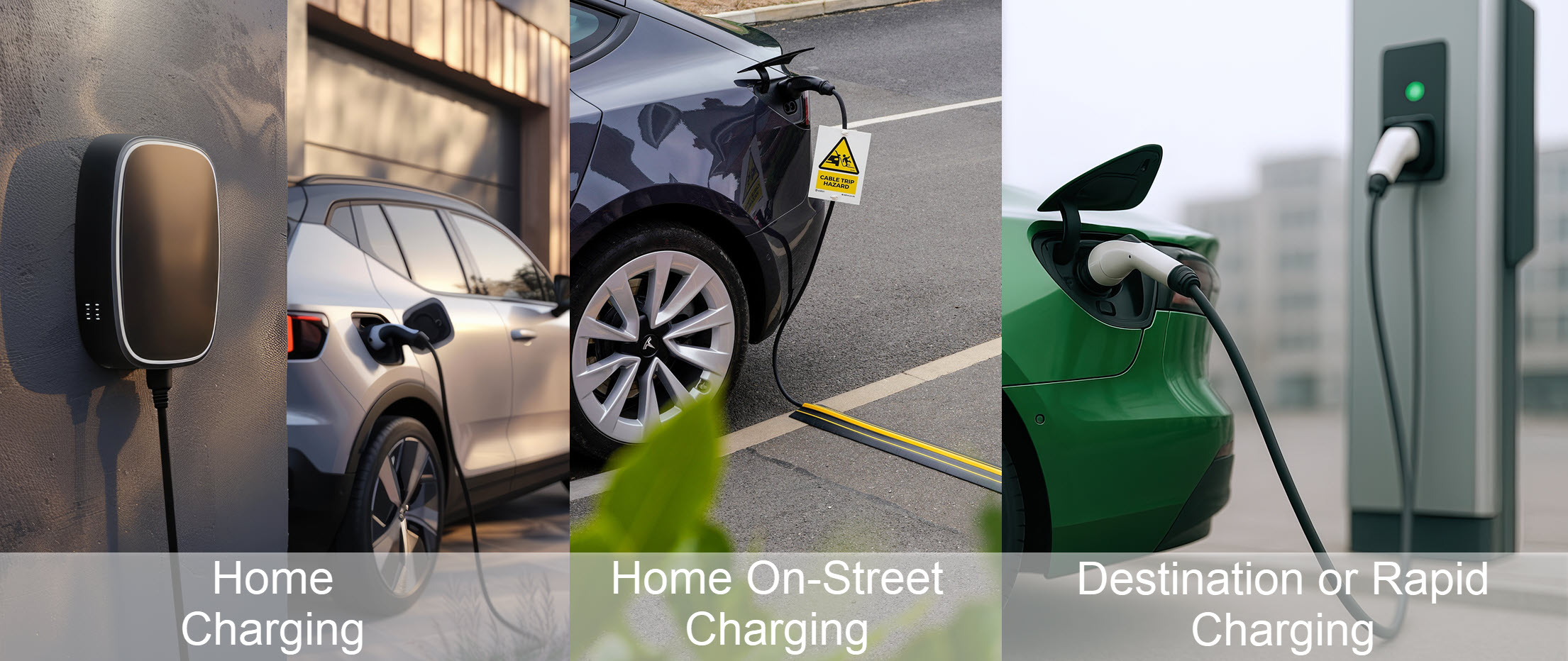
Types of Charging available
- Home Charging
- Charging your EV at home using a dedicated wall box charger installed on your driveway or in your garage.
- Common Term: Home Charger or Private Residential Charging
- On-Street Charging
- Public chargers located on residential streets, often managed by local councils or third-party providers.
- Common Term: Kerbside Charging or On-Street Public Charging
- Destination or Rapid Charging
- Charging at a bank of chargers typically found at service stations, retail parks, or dedicated charging hubs.
- Common Term: Public Charging Hub, Rapid Charging Station, or Destination Charging
The Numbers: Households and EV Adoption in the UK
The UK is home to about 28 million households and 32 million cars. With more drivers making the switch to EVs, the demand for convenient and affordable charging solutions is on the rise. However, 40% of households—around 11.2 million—do not have access to off-street parking, such as a private driveway or garage. This lack of private parking poses a significant barrier to many EV owners. There is no data of how many have street parking outside their homes within Cable reach so this study assumes that they are in the none Off Street cohort.
Why Off-Street Parking Matters for EV Charging
For those with access to off-street parking, home charging is a major advantage. It allows EV owners to install a home charging point, enabling them to plug in their cars overnight. This is particularly beneficial because many electricity suppliers offer cheaper off-peak rates, typically during the night when demand is lower. Charging at these times can significantly reduce the cost of running an EV, making it even more attractive compared to traditional petrol or diesel vehicles.
For example, charging during off-peak hours can mean rates as low as 7p to 10p per kWh, compared to 15p to 24p per kWh during peak hours. This can make a huge difference to the overall running costs of an EV.
The Challenge for Households Without Off-Street Parking
But what happens when a household doesn’t have access to off-street parking? Approximately 7.84 million households in the UK not only lack private parking but also own a car. For these households, charging an EV becomes much more complicated.
Without a driveway or garage, these EV owners must rely on public charging infrastructure. This could mean using on-street charging points, public car parks, or rapid chargers at service stations. Unfortunately, these options often come with higher costs and less flexibility in charging times, making it harder to take advantage of cheaper off-peak electricity rates.
The Cost Disparity: Home Charging vs. Public Charging
The inability to charge at home creates a significant cost disparity between those with and without off-street parking. Here’s the difference:
- Home charging at off-peak rates of 7p per kWh would cost an EV owner £3.50 for a 50 kWh charge.
- Charging at peak home rates of 24p per kWh would cost £12 for the same 50 kWh charge.
- Public charging, especially at fast or rapid chargers, often costs between 60p to 80p per kWh. A 50 kWh charge at 60p per kWh would cost £30, while at 80p per kWh, it would cost £40.
This means that those relying on public charging might pay up to 11 times more for charging their EV compared to off-peak home charging. Even compared to peak home rates, public charging is still 2.5 to 3.3 times more expensive. Over a year, this could add hundreds of pounds to the running costs of an EV, making the economics of EV ownership less favorable for households without off-street parking.
Impact on EV Adoption and Equity
The disparity in charging options can also impact the wider adoption of EVs. Households with off-street parking have a clear financial incentive to switch to electric, thanks to the potential savings on home charging. For those without, the upfront costs of purchasing an EV might seem less attractive when combined with the ongoing expenses of public charging.
This divide raises questions about equity and accessibility. The government’s push towards 2030, when the sale of new petrol and diesel cars will be banned, is a key part of the UK’s sustainability goals. But ensuring that all households can adopt EVs affordably will require a focus on making charging accessible for everyone, regardless of parking conditions.
Solutions for a Fairer EV Future
To address the challenges faced by 28% of households that own cars but lack off-street parking, several solutions could be explored:
- Expanding On-Street Charging Infrastructure: Increasing the availability of on-street chargers, particularly in residential areas, could help bridge the gap. This would allow EV owners to charge close to home, potentially even with smart meters that offer off-peak rates.
- Community Charging Hubs: Shared charging hubs, where EV owners can park overnight to charge at lower rates, could be established in neighborhoods with limited private parking options.
- Smart Charging Incentives: Some councils are trialing smart lamppost chargers that allow EVs to charge from street lights. These could be linked to off-peak electricity rates to give all drivers access to cheaper charging.
- Government Support and Subsidies: Expanding grants and incentives for installing public charging points could help accelerate infrastructure growth, making charging more convenient and cost-effective.
Conclusion
The shift to electric vehicles is a vital part of the UK’s journey towards a greener, more sustainable future. But for this transition to be fair and effective, the challenge of charging for households without off-street parking must be addressed. By focusing on improving access to affordable charging options, we can ensure that everyone has the opportunity to benefit from the low running costs of EVs, regardless of where they park.
As we look towards the 2030 target, building a robust and equitable charging network will be key to making EVs accessible for all. Let’s work together to create a future where driving electric is not just the greener choice, but the smarter one too.
 timAIKIN.com